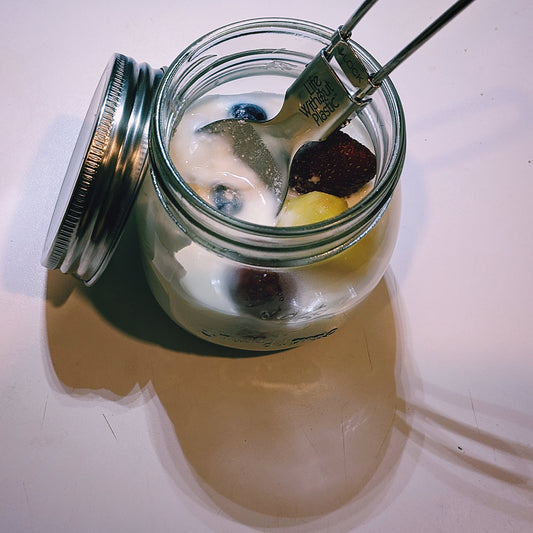
Sanctus Mundo Bento Lunch Box featured in Energy Times Earth Day Gift Guide

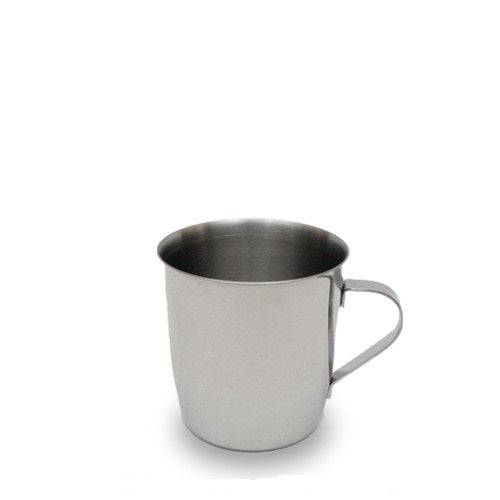
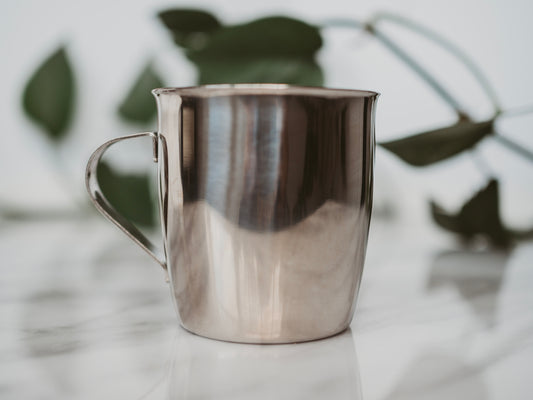
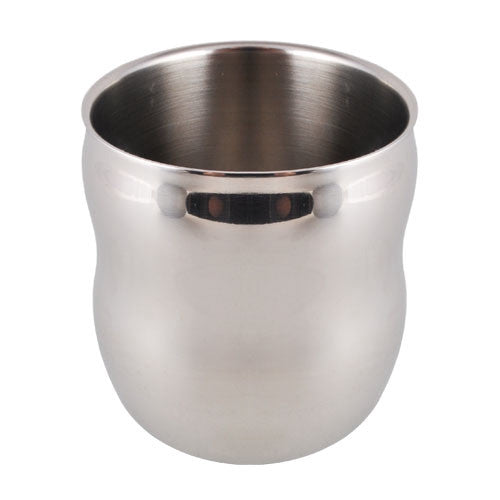
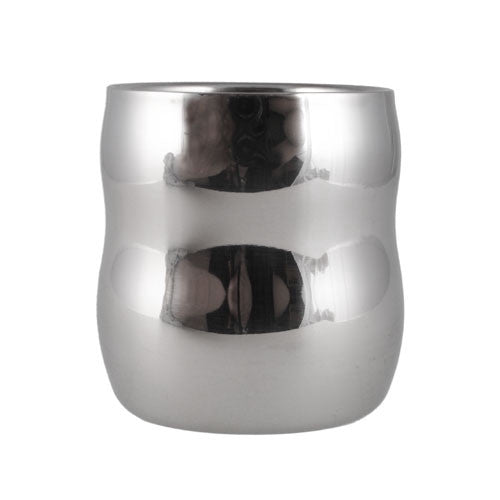
The Energy Times has put together an Earth Day Gift Guide of various eco-friendly products, including the Sanctus Mundo stainless steel bento lunch box, which is a perennial favorite among our followers. Treat every day like Earth Day by switching from a plastic lunch container to one that will last generations and not leach chemicals into your food.


Read about our Airtight Sanctus Mundo Containers in the Toronto Star

Barbara Turnbull, Living Reporter for the Toronto Star, gives her take on our Sanctus Mundo stainless steel airtight containers after receiving a set as a gift.  She liked them so much she even ordered some more. You can read her article in the Living Section of the Toronto Star.

 
LES MÈRES CONTRE LE CHANGEMENT CLIMATIQUE

Ottawa, 10 December 2009 -- Vers le fin de la premiére semaine du Conférence sur le changement climatique de les Nations-Unis à Copenhague, nous aimerions souligner le travail important et créatif de Moms Against Climate Change, un association entre les ONG Environmental Defence et ForestEthics avec le but de donner aux parents Canadiens un forum pour se rejoindre ensemble en exigeant de l'action des chefs politique Canadiens envers le rechauffement de la planète. Moms Against Climate ChangeJettez un coup d'oeil à cet video qui à commencé l'initiative et depuis est devenu virale et a été décrit le video activiste le plus regardé au monde.  

Un des buts de cet campaign a été de compiler un mur sur le web de photos d'enfants - un rappel au chefs politiques de leur constituents le plus importants. ET AUJOURD'HUI... photographs d'enfants de chaque province et territoire sont projété sur des édifice de haut visibilité à Ottawa et Vancouver, Canada comme un 'mur de photos pour le rechauffement de la terre' et de faire souvenir le Premier Ministre Stephen Harper de qui il est supposer de réprésenter à Copenhague au moment que le Parlement Canadien prend son réces de l'année. Cette phrase sur le site web des mères dit beaucoup: "IL NE FAUT JAMAIS SOUS ÉSTIMER CE QU'UNE MÉRE PEUVENT ACCOMPLIR."

 
Phthalates: Here, there, everywhere, and now linked to ADHD

plastic baby bottleWakefield, 27 November 2009 -- Phthalates - the ubiquitous plasticizing chemicals found in bottles, dishes, toys, cleaning and personal care products - are a smoking gun, maybe the next tobacco. They need to be dealt with yesterday because it is children who are most vulnerable to them, and the effects of exposure to phthalates may not surface for years. By then, damage is done. Korean researchers have found a significant positive association between urine phthalate concentrations and attention deficit hyperactivity disorder (ADHD) in a study of 261 Korean children aged between 8 and 11 years old. Here is the abstract of the scientific article in the peer-reviewed journal Biological Psychiatry.

And if you are looking for an overview of the toxic chemicals that surround us in everyday life, then check out the highly readable, utterly shockingly eye-opening Slow Death by Rubber Duck.

 (Photo credit: breastpumpsdirect.com)

 
Where plastic definitely should NOT be

San Francisco, 11 November 2009 -- Remembrance Day best wishes to Canadians out there. Life Without Plastic is in San Francisco for the 2009 Green Business Conference (you can read more about that on our blog) and attending, but not exhibiting at, the San Francisco Green Festival.  So while on the West Coast, it's an honour to highlight the stunning work of Seattle-based award-winning photographer, Chris Jordan. He has released a mesmerizing, must-watch video of photos he took in September 2009.  Here is his own description of this powerful, powerful, powerful photo and video essay, which you can watch on YouTube or directly on his site, where full size images like the one below are also available for viewing:

"These photographs of albatross chicks were made just a few weeks ago on Midway Atoll, a tiny stretch of sand and coral near the middle of the North Pacific. The nesting babies are fed bellies-full of plastic by their parents, who soar out over the vast polluted ocean collecting what looks to them like food to bring back to their young. On this diet of human trash, every year tens of thousands of albatross chicks die on Midway from starvation, toxicity, and choking.

To document this phenomenon as faithfully as possible, not a single piece of plastic in any of these photographs was moved, placed, manipulated, arranged, or altered in any way. These images depict the actual stomach contents of baby birds in one of the world's most remote marine sanctuaries, more than 2000 miles from the nearest continent."

Albatross on Midway Atoll
 
Photo Credit:  Chris Jordan
 
BPA Linked to Agressive Behaviour in Girls

Wakefield, 31 October 2009 -- The research indicating problematic health-related issues linked to the endocrine-disrupting chemical bisphenol A (BPA) continues to emerge on a regular basis.  BPA is the primary constituent of hard polycarbonate plastic used to make many babpregnant womany bottles, water bottles and the large blue-coloured water containers for water dispensers.  A recent study conducted in Cincinatti, Ohio measured the level of BPA in 249 pregnant women before and after they gave birth - 99% showed detectable levels of BPA.  The children's behaviour was then assessed at two years of age.  The researchers found that the daughters of women with the highest concentrations of BPA in their bodies exhibited aggressive and hyperactive behaviour, but there was no significant effect in boys.  The children will be tested again at five years of age.

Read the full study - Prenatal Bisphenol A Exposure and Early Childhood Behavior - published in Environmental Health Perspectives.

(Photo credit: Lake Eufala News)

 
BPA Deception: Food-Chemical Industries Targeting Mothers, Minorities and Poor

Wakefield, 24 September 2009 -- In late May 2009, food and chemical industry lobbyists met in Washington, D.C. to discuss communications strategies aimed at keeping the toxic plastic chemical bisphenol A (BPA) on the market and front and centre in the lives of mothers, minorities and the poor. The internal meeting notes were leaked to media and the Environmno bpa baby bottle ental Working Group, and indicate plans to use deception-based techniques, including using a pregnant woman as a national spokesperson on the benefits of BPA. The notes highlight the importance of focusing on the impact of BPA bans on minorities (Hispanic and African American) and poor.  Fear tactics are suggested -- e.g., “Do you want to have access to baby food anymore?” 

Read the full story at the Environmental Working Group Enviroblog.

Read the meeting notes outlining the tactics discussed at the meeting. 

There is substantial - and constantly growing - research that BPA can negatively impact health at very low doses, especially for infants. BPA has been banned in Canada for use in plastic baby bottles and containers for baby formula.  In the U.S., while the Food and Drug Administration has not yet recommended discontinuing use of BPA-containing plastic containers, a comprehensive September 2008 report of U.S. Department of Health Human Services (National Toxicology Progam) report indicated "some concern for effects [of BPA] on the brain, behavior and prostate gland in fetuses, infants and children at current human exposures."  

(Photo credit: shine.yahoo.com)

 
Du BPA dans les bouteilles "SANS BPA"!

Wakefield, 1 Août 2009 -- Des chercheurs de Santé Canada ont trouvé des traces de perturbateurs endocriniens bisphénol A ("BPA") dans des produits faits de polysulfone, polystyrène or polypropylène vendus avec la garantie "SANS BPA". Le BPA est la composante principale du plastique polycarbonate lequel est banni au Canada pour la fabrication de biberon pour bébé. Cette nouvelle est particulièrement troublante compte tenu que le BPA n'est pas sensé faire partie de ces "autres" plastiques. Les chercheurs soulèvent las possibilité d'une contamination croisée durant le processus de fabrication. Si cela était le cas, cela rendrait pratiquement impossible de savoir si un produit de plastique contient du BPA à moins de le tester individuellement. Pour plus de détails veuillez consulter l'article.

baby bottle

(photo: Canwest News Service)

 
Emballage de plastique toxique

Wakefield, 12 juillet 2009 -- Aimeriez-vous des perturbateurs endocriniens avec votre fromage?  Une étude récente publiée dans la revue internationale ScieCheese in plastic packagence of the Total Environment démontre que les éléments chimiques qui se dégagent de l'emballage de la nourriture peut augmenter l'exposition des humains à des toxines connues telles que le bisphénol A et les phthalates, ce qui peut contribuer à des effets néfastes sur la santé. Le toxicologue environnemental suisse qui a conduit la recherche, Dr. Jane Muncke, note que "l'emballage des aliments est une source importante mais sous-estimée de contamination de la nourriture (...) même les fabricants de produits en plastique ne connaissent pas l'ampleur des produits chimiques présents dans leurs produits."

(Photo:  http://www.ehow.com/how_2283077_use-cheese-slicer.html)

 
Les océans ont besoin d'aide

Wakefield, 9 juin 2009 -- Un petit ajout - le problème des déchets dans les océans est si aigü qu'il a rendu difficiles les efforts de recherche relatifs à la disparition du vol Air France Flight 447 survenue la semaine dernière:  Voir cet article en anglais seulement - Search for downed plane highlights ocean trash problem.

Wakefield, 8 juin 2009 -- Aujourd'hui, jour mondial des océans, nous désirons souligner la contribution d'une importante organisation vouée à la défense des océans ainsi que son fondateur et coordonnateur de recherche visionnaire.  Cette organisation s'appelle Algalita Marine Research Foundation ("Algalita") et son visionnaire est l'incroyable Capitaine Charles Moore.  Ensemble ils ont contribué à ouvrir les yeux du monde Capitaine Charles Mooreentier à la détresse grandissante des océans du monde et ce surtout par le biais de la recherche continue sur l'océan Pacifique.  Mais pourquoi cette recherche est-elle si importante?  En voici une raison: les planctons de l'océan sont à la base de la chaîne alimentaire. Or, les recherches de Algalita démontrent que les particules de plastique situées dans le tourbillon océanique nord Pacifique central sont six fois plus nombreux que les planctons.  Les poissons mangent le plastique en croyant qu'il s'agit de planctons, et le plastique se propage ainsi dans la chaîne alimentaire en causant des dommages importants et en provoquant la mort de nombreux animaux marins.   Pour un excellent aperçu de cette question de différents points de vue, et pour en apprendre plus sur le capitaine Moore, veuillez consultez cet article (en anglais seulement): Our Oceans Are Turning Into Plastic... Are We?

Pour entendre et voir le capitaine Moore décrire ces questions de manière éloquente avec des images à la conférence TED de 2009, veuillez suivre ce lien (en anglais seulement): 2009 TED Conference.  À la droite, voici le capitaine Moore exhibant un exemple des débris que l'on retrouve dans le tourbillon océanique du Pacifique.

Comment aider?  Réduire sa consommation de plastique dès maintenant.

Bird carcass filled with plastic (Algalita)

La carcasse d'un albatros remplie de débris de plastique

(Photos gracieuseté du Algalita Marine Research Foundation)

 
HOME > hymne à la terre

Partout, 5 juin 2009 -- Aujourd'hui est la journée mondiale de l'environnement. En ce jour spécial, un film important a été lancé sur l'Internet pour que tous puisse l'admirer gratuitement jusqu'au 14 juin 2009.  Ce film est à voir absolument.  Il s'agit de l'oeuvre du talentueux photographe français Yann Arthus-Bertrand en collaboration avec le metteur en scène français Luc Besson.  HOME raconte l'histoire de notre planète depuis son commencement jusqu'à aujourd'hui en traversant 54 différents pays.  Un film qui fait réfléchir et qui nous encourage à passer à l'action.  Tel que le film l'évoque, "il est trop tard pour être pessimiste".  Il est maintenant temps de "cultiver le soleil" en faisant preuve de modération, d'intelligence et de partage". 

home heart
Coeur à Voh, Nouvelle Calédonie (20°57'S, 164°41' E)
photo par Jann Arthus-Bertrand
 

Regarder le film:  http://www.home-2009.com/fr/index.html

Pour en apprendre plus sur l'organisation derrière le film:  http://www.goodplanet.org/

 
Nouveau livre: Slow Death by Rubber Duck

Ottawa, 13 Mai 2009 -- Un nouveau livre paru récemment, Slow Death by Rubber Duck, aide ses lecteurs à mieux comprendre l'effet sur notre santé de toutes les toxines qui nous entourent au quotidien.  Les aucouverture du livre slow death by rubber duckteurs, Rick Smith et Bruce Lourie, respectivement directeur exécutif et Président du conseil d'administration de Environmental Defence, l'organisme sans but lucratif qui a contribué grandement à bannir le BPA des biberons pour enfants, se sont volontairement exposés à une grande variété de produits chimiques que l'on retrouve dans nos produits de consommation de tous les jours.  Ils ont ensuite fait analyser des échantillons d'urine et de sang prélevés au cours de l'expérience.  Le résultat en surprendra plus d'un.  Il vous fera changer pour toujours votre perception des canards en plastique.


author and product photo
 
<< Début < Préc 1 2 3 Suivant > Fin >>

Page 2 de 3