|
Support Free Speech and Innovation -- Help Stop the US Internet Blacklist Legislation |
|
16 January 2012 -- Two pieces of legislation currently making their way through the U.S. lawmaking process threaten to seriously damage the nature and functioning of the Internet as we know it. The Internet blacklist legislation - known as the PROTECT IP Act (PIPA) currently before the U.S. Senate, and the Stop Online Piracy Act (SOPA) currently in the U.S. House of Representatives - harms the free and open Internet and creates new tools to censor international websites inside the United States. It compromises Internet security, inhibits online expression and hampers online innovation. The Electronic Frontier Foundation has put together a very good list of reasons to oppose PIPA and SOPA. In an unprecedented move, on January 18, 2012, the Wikimedia Foundation, which operates the free online encyclopedia Wikipedia, will blackout the English version of Wikipedia for 24 hours in protest against the proposed legislation. You can read the statement from the Wikimedia Foundation here, and a personal message from the Executive Director of the Wikimedia Foundation, Sue Gardner, here.
You can take action here with the assistance of the Electronic Frontier Foundation and tell your Congressional representative that you oppose this destructive legislation.
|
|
Lire la suite...
|
|
Life Without Plastic Featured in 'Faces of the Green Pages' |
|
Washington D.C., 1 January 2012 -- We are thrilled and honored to be the featured business in Green America's January 'Faces of the Green Pages' - a monthly candid interview of a business member listed in Green America's amazing Green Pages. Have a read through the interview to learn more about what we do, why we do it, and how it all began... And we would strongly suggest that you take a look at all the fabulous information and suggestions in the 'Take the Plastic Challenge' issue of the Green American magazine. Go ahead and Take the Plastic Challenge by looking closely at the plastics you use in your everyday life, and ways to decrease them.
|
|
Lire la suite...
|
|
NOUS VOUS SOUHAITONS UNE BONNE ANNÉE 2012... SANS PLASTIQUE! |
|
Chaleureusement, Chantal, Jay et toute l'équipe de Vivre Sans Plastique (Anna, Judy and Alise) |
|
Check Out Our New Take-Out and Travel Section |
|
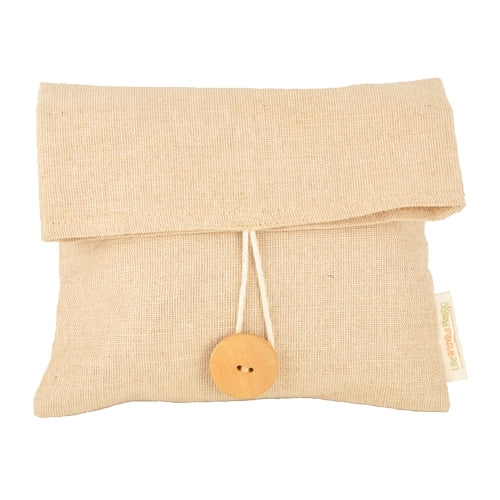
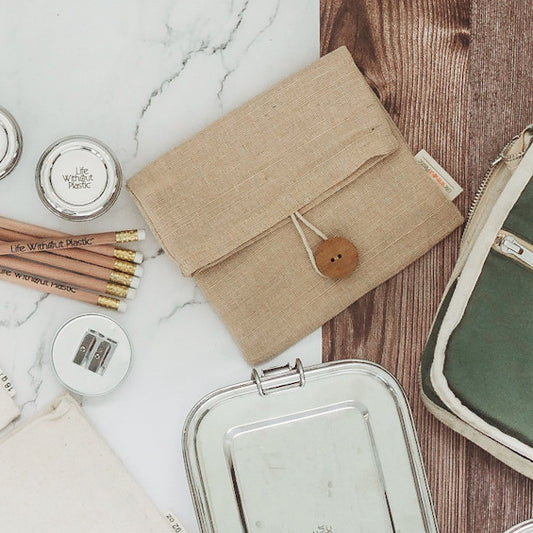
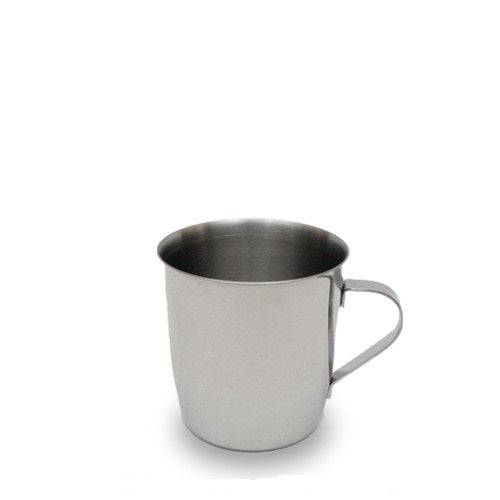
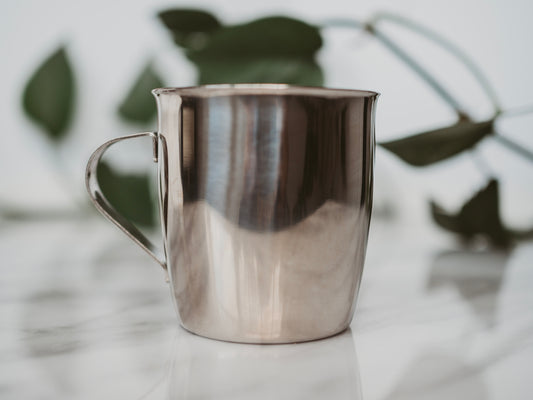
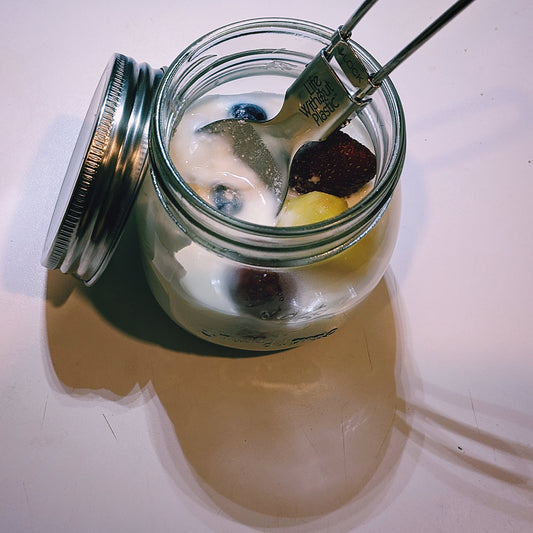
Wakefield, 18 October 2011 -- We have put together a new category called "Travel and Take-Out". It contains plastic-free and reusable alternatives to products that we often forget to bring with us when we go for take-out or when we travel. You can have a tangible impact in reducing the consumption of disposable plastics. It makes sense to keep a fork or spoon in your purse or glove compartment in case you need to eat on the go. We found an even better option: a foldable stainless steel spork! And you should always have a mug or cup handy, or even better, a reusable and foldable stainless steel cup. We have it too. As far as styrofoam containers are concerned, why not replace them with a reusable and plastic-free stainless steel tiffin? We have even designed an organic cotton bag to carry all these things to your favorite take-out place. The bag handily opens up as a tablecloth for when you eat in a cafeteria or outdoors under a tree. |
|
Lire la suite...
|
|
Big Plastic Suing Reusable Bag Maker And Influencing Education |
Update (13 September 2011): GOOD NEWS - LAWSUIT DROPPED! DETAILS HERE AND SEPT 19 NYTIMES OVERVIEW HERE
Wakefield, 12 September 2011 -- Reusable bag maker Chicobag is being sued by several large plastic bag manufacturers who allege that statements on Chicobag's 'Learn the Facts' webpage are false and misleading. The webpage references
widely accepted information to illustrate the gigantic gap between the
consumption rates and recycling rates of single-use plastic bags, and the general impacts of single-use use plastics on our oceans and environment. Please consider signing the Care2 petition calling on the plastic giants to drop their lawsuit.
There are much more productive ways to spend such time, energy and
resources. Marin County and the City of Long Beach California have also
been sued for taking stands against the ubiquitous polluting
single-using plastic bag. Action to protest this sort of bullying tactic is especially important and urgent given the recent news that the American Chemistry Council, a key lobby group for the plastics industry, has had direct influence over the drafting of the environmental curriculum for California public schools. Balance in educational materials is critical, but since when do 11th grade students need to be told by the plastic industry about "the advantages of plastic shopping bags"? Image credit: Chicobag
|
|
Wakefield, 5 July 2011 -- You care about the environment - you want to learn more about what's happening environmentally all over the world - and you like to laugh? Grist is for you. As part of the 'Grist dared me to make a change' series, Grist writer Mike SanClements is doing a plastic purge. Here is his vow: "For two weeks, starting July 5, I am going to eliminate as much plastic as possible from my life. I will
not purchase anything packed in or containing plastic. I will not eat any foods
packaged in plastic. I will not use hygiene products packaged in plastic
(except this recycled plastic toothbrush I
already have, as no toothbrush would just be nasty), nor will I create any
plastic waste." We've teamed up with the fine folks at Grist - this top notch on-line environmental news source with a twist (a twist of "gloom and doom with a sense of humor") - to offer you the chance to support non-profit, independent environmental journalism at its best, and at the same time maybe even get a complimentary airtight stainless steel container from us if you hurry. The first 65 people to support Mike in his plastic purge by donating $25 or more to Grist will receive a container. The harder you laugh, the better your chances are.
|
|
Lire la suite...
|
|
An Ocean of Ideas for Celebrating World Oceans Day |
|
TRADUCTION À VENIR Wakefield, 8 June 2011 -- Water: The precious, gorgeous lifeblood of Mother Earth. Today is World Oceans Day! Celebrate by recognizing and loving the gorgeous seas of blue that connect us all around the world and provide a haven for life in so many forms. This year we are not going to talk only about plastic pollution in the oceans. Just a little...if you want to find out more about plastic pollution in the oceans, take a look at these key sites: 5Gyres, Algalita Marine Research Foundation, Chris Jordan's Midway: Message from the Gyre.
At the World Ocean's Day site maintained by The Ocean Project, you can find a variety of ideas about how to celebrate and make a difference. A few examples:
- Take the Seven C's Pledge
- Clean up a watershed near you
- Wear Blue, Tell Two - wear blue clothing to raise awareness about ocean conservation, and share two pieces of info about why it's important to raise ocean awareness - here are a couple of ideas...
--- The diverse wealth of life in the oceans is in trouble. Climate change has already been linked to the killing of coral reefs. Coupled with destructive fishing practices, there is a dramatic decline in many types of fish and sea life we depend on. Calculate your carbon footprint and look for ways to reduce your contribution to climate change. Here are some resources and carbon calculators you can use: David Suzuki Foundation, Environmental Protection Agency, Government of Canada, StopGlobalWarming.org, The Nature Conservancy, Berkeley Institute of the Environment
--- Learn about ocean species at risk, and if you eat seafood, choose species that are abundant in supply, low in environmental contaminants, and fished or farmed without harm to the oceans and coasts. The Blue Ocean Institute and the Environmental Defense Fund provide superb overviews of the issue and solid, well-researched guides (including separate sushi guides) to help you understand what seafood is the best for promoting sustainable, healthy oceans and minimal intake of chemical toxins.

Image credit: 5Gyres (taken during a trawling expedition through a subtropical ocean gyre collecting plastic debris for research purposes) |
|
Joyeuse Journée de la Terre! L'amour plastique toxique? |
|
TRADUCTION À VENIR
Wakefield, 22 April 2011 -- As we often say, we consider every day Earth Day. But it's a powerful thing to have one day of the year when Mother Earth is celebrated more intensely and by so many worldwide simultaneously. On this Earth Day, we have chosen to highlight an important new book released this week - Plastic: A Toxic Love Story - that focuses on our societal relationship with plastic, and some of the fundamental ways this complex, colorful, and, yes, often toxic substance has impacted the world and each person in it. Seasoned journalist Susan Freinkel shares reflections on her personal relationship with plastic by guiding the reader through the history and life cycles of a cast of characters we can likely all relate to in some way: a comb, chair, Frisbee, medical IV bag, disposable lighter, grocery bag, soda bottle, and credit card. Engagingly written and scrupulously researched, the book is sure to open many eyes, and elicit many exclamations of, 'Wow, I had no idea!'  Freinkel interviewed people involved with plastic in numerous contexts and on various sides of the issues. From the plastic chair manufacturer ("Plastic is so much better than anything else!") to the neonatal specialist ("We all thought plastics were inert, safe. We didn't have to worry about it. Then as the research came out, it became more and more evident we needed to pay attention") to the biobased polymer advocate ("all plastics aren't created equal") to the anti-plastic activist ("You have to prioritize what's important in your life."). Freinkel is hopeful that the human relationship with plastic will evolve to a better place. Her book is a solid overview of the role plastic plays in our lives. While not especially suggestive of ways to take action to address the plastic in your own life or beyond, it will make you think, and think twice, about all the plastic around you. And we think that is a very good exercise. When the publishers first contacted us to ask if we would be interested in promoting the book by contributing to their Earth Day Plastic-free Prize Pack, we were immediately interested. And now having reviewed the book, we are happy to recommend it with enthusiasm. We contributed several products to the Prize Pack and are in good company with other organizations committed to decreasing plastic consumption and use. You can learn more about the sweepstakes to win the Prize Pack by clicking here. The sweepstakes ends at 11:59 p.m. ET on April 25, 2011. One winner will be picked in a random drawing. If you are interested in purchasing the book online, we would suggest you do so by accessing the Amazon website through Beth Terry's luminous blog, My Plastic-free Life, where she offers a thoughtful review of the book. Beth is a constant inspiration to us and an anti-plastic activist extraordinaire. By buying the book through the link on her site - copied here - you help support her important work. |
|
Lire la suite...
|
|
Food Packaging Increases Exposure to BPA and Key Phthalate: |
|
TRADUCTION À VENIR -- Wakefield, 30 March 2011 -- A groundbreaking peer-reviewed study by the Breast Cancer Fund (BCF) and the Silent Spring Institute (SSI) on the effects of plastic food packaging was announced today, and has been published in the journal Environmental Health Perspectives. It is entitled: Food Packaging and Bisphenol A and Bis(2-Ethylhexyl) Phthalate Exposure: Findings from a Dietary Intervention.
Laboratory studies with animals have link endocrine disruptors,
including bisphenol A (BPA) and phthalates, to various adverse health
effects, but this appears to be the first peer-reviewed study involving
human test subjects. The researchers provided five San
Francisco Bay Area families with three days worth of fresh organic food
- stored only in glass, not canned or packaged in plastic - and the
family members also avoided packaged foods prepared outside the home.
The families were tested before, during and after eating the fresh food
for three days, and the results were stunning. Their levels of
endocrine disruptors decreased dramatically, in particular bisphenol A
(BPA), which showed a 60% decrease, and Bis(2-Ethyhexyl) Phthalate
(DEHP), a 50% dip. The upshot: Decrease your exposure to plastic
packaging and you decrease your intake of endocrine disruptors.
Both
BPA and DEHP are commonly used in food packaging; BPA as polycarbonate
plastic for drinks and the epoxy liner of most canned goods, and DEHP
as a softening agent in many plastic wraps. BPA has been linked to
numerous health problems including chromosomal and reproductive system
abnormalities, impaired brain and
neurological functions, cancer, cardiovascular system damage,
adult-onset diabetes, early puberty, obesity and resistance to
chemotherapy. DEHP has been shown to interfere with hormonal signaling
and male reproductive development in laboratory and human studies. For a detailed overview of the study, take a look at this Fact Sheet prepared by BCF.
Based on the study and other research, BCF and SSI make the following suggestions for decreasing BPA and phthalate intake: * Cook at home with fresh foods. Avoid canned foods. * If eating out, choose restaurants that use fresh ingredients. * Store food in glass or stainless steel rather than plastic. * Do not microwave food in plastic. * For coffee, use a french press, rather than an automatic coffee maker as most have plastic interiors and tubing They
strongly suggest avoiding the canned foods listed in the graphic below
as they are especially acidic, salty or fatty, and thus increase BPA
leaching. Graphic credit: Breast Cancer Fund |
|
Lire la suite...
|
|
|