|
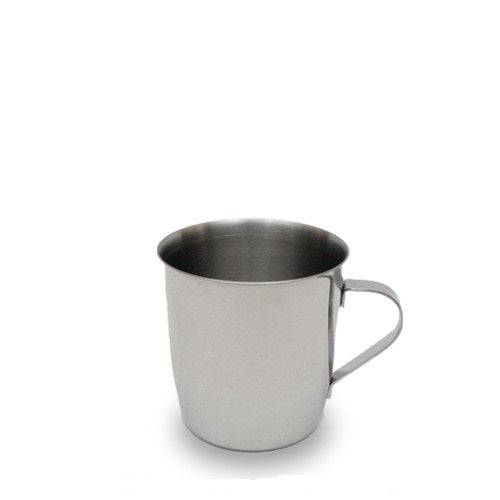
Wakefield, 19 July 2010 -- The long-awaited Sanctus Mundo ice cube tray is finally here! We know it's well-made and it has been tested to ensure it is safe and toxin-free. It's modelled after those aluminum beauties from the fifties, but has been made to exacting modern standards out of the highest quality 304, 18-8 stainless steel - no aluminum here! It also works beautifully for freezing baby food, pesto, juice - lots of room for creativity. And the pull lever folds snugly down into the mechanism so you can stack the tray and save valuable space in the freezer.
Plastic-free ice is now possible!
|
|
Non-Plastic Toilet Brushes Exist and They are Now in Stock! |
|
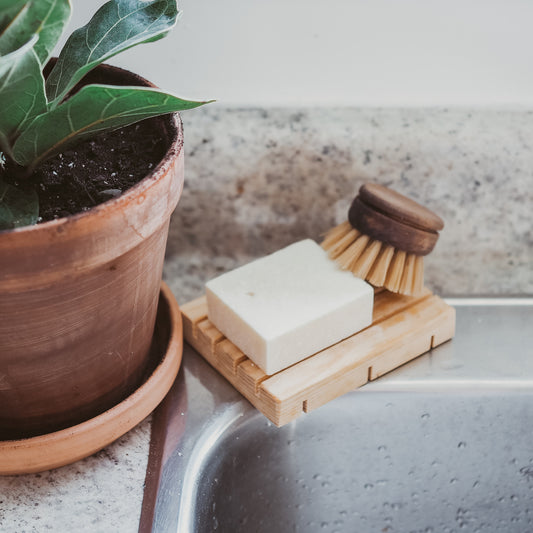
Wakefield, 27 June 2010 -- For those who thought that there was no such thing as a completely non-plastic toilet brush, Life Without Plastic brings to North America the completely natural, non-plastic, eco-friendly, sustainable toilet brush and its holder. Plastic toilet brushes generally last only a few months before they are thrown out and replaced, thus adding more plastic to landfills and the oceans. Fortunately, one small family business in Germany still makes them the way they used to be made, with style and elegance. Introducing our beautiful natural plastic-free toilet brush and stand. The brush features light, strong
vegetable-based bristles on an untreated sustainably harvested
beechwood handle. It comes with a matching wooden stand and a
small ceramic plate to hold excess water. No plastic at all! The brush can also be bought as an individual item. Also check out our new line of brushes for the home, the kitchen and the body, including natural toothbrushes made of wood and natural boar bristles. |
|
Vive Plastiki on World Oceans Day! |
|
Wakefield, 8 June 2010 -- Today is World Oceans Day. Why not celebrate by not disposing of any plastic today? Just thinking about plastic in this way will make you realize how much it likely plays an integral part of your life. In honour of World Ocean's Day we would like to highlight the PLASTIKI, a Kontiki-like seacraft made of over 12,000 plastic bottles, which is currently sailing across the Pacific Ocean to raise awareness about marine pollution - the majority of which is plastic (we won't even get into oil in this post). According to the voyage tracker, the Plastiki is currently passing the island of Tuvalu. Here are some recent ocean pollution stats from the Plastiki FAQ page: - It is estimated that almost all of the marine pollution in the world
is comprised of plastic materials. The average proportion varies
between 60% and 80% of total marine pollution.
- In many regions in the northern and southern ocean Gyres, plastic materials
constitute as much as 90 to 95% of the total amount of marine debris.
- Scientists estimate that every year at least 1 million seabirds and
100,000 marine mammals and sea turtles die when they entangle
themselves in plastic pollution or ingest it.
The Expedition Leader is David de Rothschild, a self-described flexible, cheerful, observant, persistent, impulsive, stubborn, distractible Brit who lives under a mushroom and can't live without ginger. Here is an excerpt from his blogpost today for World Oceans Day: "Put simply, in essence, whichever way you want to slice it, we are all part ocean. In basic terms:
No Oceans = No You and Me!
No Oceans = no place to hide the 41% of carbon that is so conveniently and fortunately absorbed by our oceans.
No Oceans = no protein supply to one fifth of the world population.
No Oceans = no home for the estimated 50-80% of all life on earth that lives under the surface of our oceans." Image credit: Plastiki
|
|
TOXIC AMERICA on CNN with Dr. Sanjay Gupta |
Wakefield, 1 June 2010 -- CNN is about to premiere a feature special called Toxic America focusing on the toxic chemicals that surround us in everyday life, whether we realize it or not. The show will be hosted by Dr. Sanjay Gupta over two nights (June 2 and 3, at 8pm EST and PST) and will in large part focus on the health and environmental effects of toxins found in plastics. Here's a little video promo of the series. As explained on the website of the Center for Health, Environment and Justice, Night #1 (Wednesday) will be an "hour-long investigative story into the environmental health and justice
problems plaguing the community of Mossville, Louisiana. Nestled amidst
an alarming cluster of chemical plants, Mossville is home to more PVC
chemical plants than anywhere else in the entire country, and has been
dubbed the Vinyl Manufacturing Capital of America." Night #2 (Thursday) will deal with the effects of "hidden toxins" in all of us, particularly expectant mothers and their babies. It will also feature a profile on Jeanne Heagle, who has been living plastic-free for over 2 and 1/2 years. This investigative series links well with the stunning book we have talked about often in the past: Slow Death by Rubber Duck. Tune in tomorrow and Thursday and learn about the chemicals in your life.
|
|
U.S. President's Cancer Panel Highights Plastic as Problematic: Recommends Precautionary Approach |
|
Wakefield, 14 May 2010 -- On May 6th, the President's Cancer Panel released a landmark report entitled REDUCING ENVIRONMENTAL CANCER RISK What We Can Do Now. The report raises clear flags about chemical regulation and the dangers of certain chemicals to health. Pulitzer Prize-winning New York Times op-ed columnist Nicholas D. Kristof read the landmark 200-page report and has written a succinct overview of the report in his opinion piece New Alarm Bells About Chemicals and Cancer. He describes the President's Cancer Panel - which is made up of three reknowned cancer experts who review the US cancer program and report directly to the President - as the "Mount Everest of the medical mainstream" and "the mission control of mainstream scientific and medical thinking". Most refreshingly, the report firmly advocates a shift in the regulatory system from a reactionary to a precautionary approach, including taking preventive action in the face of uncertainty regarding the effects of many chemicals on health. There are detailed sections on various chemicals that leach from plastics - including endocrine disruptors like bisphenol A (BPA) and phthalates - and the report even makes the following recommendation, and many others, to individuals for implementation in daily life: "Storing and carrying water in stainless steel, glass, or BPA- and phthalate-free containers will reduce exposure to endocrine-disrupting and other chemicals that may leach into water from plastics. This action also will decrease the need for plastic bottles, the manufacture of which produces toxic by-products, and reduce the need to dispose of and recycle plastic bottles. Similarly, microwaving food and beverages in ceramic or glass instead of plastic containers will reduce exposure to endocrine-disrupting chemicals that may leach into food when containers are heated." How encouraging that the medical and scientific mainstream are finally aware of and even recommending preventive precautionary action regarding the dangers associated with plastics. Cancer cell photo credit: http://www.under-microscope.com/cancer_cells/
|
|
Celebrate Earth Day By Not Using Plastic |
|
Wakefield, 22 April 2010 -- Happy Earth Day! Here at Life Without Plastic we consider every day Earth Day, but it is good to feel the momentum of the whole world focusing on Mother Earth at the same time. Like Earth Hour, that collective positive energy can only be a good thing and help increase environmental awareness. We were pleased to see the Huffington Post's challenge to humanity on how best to take action on Earth Day: 7 Things You Can Do For Earth Day That Actually Matter. And what is action #1? It's simple really: Stop Using Plastic. And here is what the good folks at Huffington Post have to say about plastic: "There is no doubt that plastics are notoriously bad. Americans dispose of 10.5 million tons of plastic garbage every year, and about 8%
of the world's annual oil production is used toward the creation of
plastic products. A single plastic bottle can spend anywhere from 100
to 1000 years in a landfill, and while recycling plastics helps save up to 60%
of the energy used to make new products, they are often "downcycled"
which doesn't curb the demand for more plastic to be produced, and it
does little to prevent plastics leeching cancer-causing chemicals. Thanks to our wasteful habits, we've created huge islands of plastics in both the Pacific and Atlantic, and we not only kill up to a million sea creatures every year with plastic, but also ingest toxins that have made their way up the food chain from this waste.
Imagine the wonderful impact on the environment if you stopped using those 190 pounds of plastic each year. Say NO to plastics, and make your commitment by pledging with others at the Plastic Pollution Coalition." So be a part of the growing awareness and do what you can to reduce your plastic use. Be like the trees and reach for the sky...

|
|
U.S. EPA on BPA: Finally Taking a Closer Look |
|
Washington, D.C., 15 April 2010 -- On March 29th, the U.S. Environmental Protection Agency (EPA) announced a bisphenol A (BPA) action plan to look deeper into the potential effects of BPA. The plan focuses on the environmental effects of BPA and will consider adding the chemical to the EPA's 'chemicals of concern', a new list announced on December 30, 2009, and currently including phthalates and polybrominated diphenyl ethers (PBDEs). The BPA action plan is available on the EPA website. BPA is used to make the hard, clear plastic polycarbonate (#7), which is used for water and baby bottles, the linings of metal food cans, and numerous other common products. Billions of pounds of BPA are produced each year, and over one million pounds of BPA are released into the environment annually. What effect is that having on living beings? Peer-reviewed scientific research is increasingly linking BPA, which is an endocrine disruptor, to numerous adverse health effects ranging from developmental problems to cancers. What we also know is that when people are tested, BPA inevitably shows up in their bodies, if not through exposure from the chemical leaching out of food containers into their food, then likely from environmental exposure. For a fascinating example of such test results, check out one of our favorite books: Slow Death by Rubber Duck by the good folks at Environmental Defence. 
Image credit: Photo by Nigel Cox from the eye-opening 2009 Fast Company article 'The Real Story Behind Bisphenol A', which uncovers a long history of corporate-government collusion and conflicts of interest in refuting and covering up the growing body of solid, non-industry funded, scientific research pointing to the dangers of BPA. Definitely worth a read.
|
|
THE GREEN KEYS TOUR - Visionary Eco-Pianist FRANK HORVAT Live |
|
Montreal, 23 March 2010 - Life Without Plastic is thrilled to be a sponsor for virtuoso eco-musician Frank Horvat's Green Keys Tour of solo piano performances across Canada. And what makes an 'eco-musician', you ask? According to Frank it means the musician is carrying on their professional activities in a sustainable way and minimizing their carbon footprint. Take a look at all the ways Frank is doing this on The Green(ing) Musician page of his website. The tour will raise funds for the Earth and promote Frank's latest CD - A Little Dark Music - of original piano compositions, which explore "real world themes like the environment, poverty and Sept 11. Despite
the somewhat sombre and serious subject matter, A Little Dark Music
attempts to bring peace, joy and contentment to its listeners." Here is a man with vision, making music with vision, and saving the Earth along the way. We hope you will get a chance to hear Frank play. We are sponsoring his Montreal concert on April 11, 2010, but tour dates are happening all across the country through 2010 and into 2011. 
|
|
Sanctus Mundo airtight containers recommended by Whom You Know |
|
New York City, 10 March 2010 - Manhattan's very own Peachy Deegan and the Whom You Know Earthy Peachy Panel have recommended the Sanctus Mundo airtight containers, which are available at Life Without Plastic. Whom You Know features "Manhattan's best in class & most interesting: people, places, events, books, fashion, restaurants and a general guide to better living & pursuing excellence in life." And through the Earthy Peachy Panel, Whom You Know is now putting more focus on some of the best green products out there. The Panel of seven experienced reviewers have tested out the Sanctus Mundo airtight containers, and here is what they have to say: Sanctus Mundo & Life Without Plastic Airtight Containers Recommended by Whom You Know's Earthy Peachy Panel. |
|
U.S. FDA changes position and warns about BPA |
|
Wakefield, 15 January 2010 -- Despite growing evidence to the contrary, the U.S. Food and Drug Administration (FDA) has long held that bisphenol A (BPA) - used to make the hard, clear plastic polycarbonate - is safe even when indirectly ingested via plastic baby bottles or canned food linings. This has now changed as the government begins to raise flags about BPA. The FDA just released it's Update on Bisphenol for Use in Food Contact Applications: January 2010, and states that it has "some concern about the potential effects of BPA on the brain, behavior, and prostate gland in fetuses, infants, and young children. In cooperation with the National Toxicology Program, FDA’s National
Center for Toxicological Research is carrying out in-depth studies to
answer key questions and clarify uncertainties about the risks of BPA." This moves the U.S. more in the direction of Canada, where the Canadian Government has designated BPA as toxic and banned its use in baby bottles. The FDA will now carry out in-depth studies to answer key questions and clarify uncertainties about the risks of BPA. In the interim, the FDA has posted BPA information for parents, including recommendations on how to reduce exposure to BPA. Image credit: Royal Society of Chemistry (RSC)
|
|
|